

Specialist Areas


Trauma and Attachment
My work is trauma-informed and attachment-based, recognising that difficult or overwhelming experiences are often held in the body as much as the mind. I create a space where safety and trust come first, allowing painful experiences to be explored gently and at a pace that feels manageable. I pay close attention to pacing and readiness, never pushing someone to revisit painful material before they feel able to.
I understand that trauma can affect how people relate to themselves and others, sometimes making trust, closeness, or vulnerability feel difficult. My attachment-based approach means I hold this in mind throughout, working to build a relationship where safety can be experienced, often for the first time.
Because trauma can be difficult to put into words, I use art as a way of externalising and containing overwhelming experiences, allowing them to be looked at, held, and processed a little at a time, rather than all at once.
I also recognise that trauma responses are protective, not a sign of something being "wrong" with someone. My role is to help people understand their responses with compassion, and gradually build a greater sense of safety and choice in their lives.
· Bereavement and loss
· Trauma and attachment
· Life-limiting illness and cancer support
· Children and young people
· Parent-child relationships -Dyadic practice
· Reflective practice and staff wellbeing
Bereavement and Loss
Loss touches every part of life. I support people before and after bereavement, helping them process the shock, sadness, anger, and sometimes relief that grief can bring, and find their own way of carrying it forward.
I understand that loss isn't only about death. It can also mean the loss of health, independence, identity, or an imagined future, and these losses deserve just as much space to be acknowledged and explored.
I work with people at different points in their grief: those anticipating a loss, those in the raw early stages, and those who find that grief resurfaces months or years later, often triggered by anniversaries, milestones, or unexpected reminders.
Rather than encouraging people to "move on" from grief, I help them find ways to live alongside it — building a relationship with loss that allows both pain and connection to coexist, and making space for continuing bonds with who or what has been lost.


Life-Limiting Illness and Cancer Support
I work closely with people living with a terminal diagnosis or cancer, as well as those supporting loved ones. Illness can bring fear, uncertainty, and profound change to a sense of self, and art offers a way to process these experiences and find moments of meaning, connection, and calm alongside the difficulty.
I have experience working with people across many different diagnoses and stages of their cancer journey, from the shock of first diagnosis, through active treatment, to life after treatment ends, as well as those living with recurrence or advanced disease. Each stage brings its own emotional landscape, whether that's fear and disorientation at diagnosis, the physical and emotional toll of treatment, or the complex adjustment of surviving and then being in the space of "what now." I support people wherever they are on that journey, adapting to what they need at each point.
Children and Young People
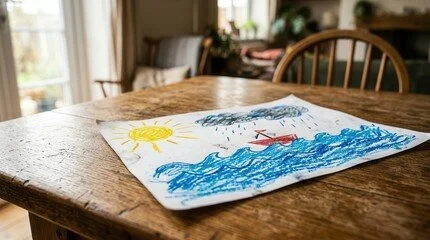
Children often express themselves through play and creativity rather than words. I meet children where they are, following their lead, to help them process difficult experiences, including illness, loss, and bereavement in a way that feels natural and safe for them.
I also work with schools to support children with loss, anxiety, and the everyday challenges many young people face growing up. This can include friendship difficulties and changes at home, to anxiety, low confidence, and big transitions. Using art and play, I help children build a language for their feelings, develop coping strategies, and feel more understood and supported, both in and out of the classroom.
Parent-Child Relationships - Dyadic Practice
Difficult experiences don't just affect individuals; they ripple through relationships too. I support parents and children in strengthening their connection and understanding of one another, particularly during periods of illness, loss, or change within the family.
Working dyadically with a parent or caregiver alongside their child is a specialist and relatively rare area of practice. It requires holding two people's experiences at once, attuning to the child's world while also supporting the adult who is often carrying their own grief, fear, or exhaustion, sometimes while trying to "stay strong" for their child.
This way of working can help repair or strengthen attachment at moments when it's most under strain, when illness, loss, or trauma has disrupted the natural rhythm between parent and child. By creating a shared space for both to be seen and supported together, rather than separately, I can help rebuild trust, communication, and closeness within the relationship itself, not just within each individual.
Reflective Practice and Staff Wellbeing
Alongside individual and family work, I offer reflective practice sessions for teams and staff groups, particularly those working in emotionally demanding environments such as healthcare, education, and hospice settings. These sessions provide a supportive space to process the impact of the work, reduce burnout, and sustain compassionate care.
This is an area of growing need. Staff in healthcare and palliative settings are often expected to hold immense emotional weight on behalf of patients and families, frequently with little structured space to process what they are carrying themselves.
I draw on my organisational and change-management background to understand the wider systems staff are working within the pressures, culture, and dynamics that shape a team, alongside my clinical understanding of trauma, grief, and attachment.
This combination allows me to design and facilitate reflective practice groups that genuinely meet staff where they are, rather than offering a generic wellbeing initiative.
The aim is simple but essential: to help staff maintain their own wellbeing and resilience, so they can continue holding and caring for patients without being depleted by the work.
In settings where compassion fatigue and burnout are increasingly common, this kind of reflective space isn't a luxury. It's a necessary part of sustainable, high-quality care.