Using art to heal
“Art is restoration: the idea is to repair the damages that are inflicted in life, to make something that is fragmented - which is what fear and anxiety do to a person - into something whole”
March 2026
As a former supply teacher in an SEN provision within a primary school I worked with many children with varying, social and emotional needs, alongside physical challenges especially in terms of their ability to communicate. One child that I work closely with is non-verbal and I have seen them experience extreme difficulties in expressing his needs and emotions. I am interested in looking at how art can be used to help to support and heal a person with physical and emotional needs.
At the BAAT Conference 2020 one of the webinars by Tjasink and Martinelli examined ‘The he(art) of medicine - Using art and art therapy to foster compassion and relationship in a highly pressured medical setting. Their use of art therapy in St Bartholomew’s Hospital during the Covid pandemic was fascinating in how they were able to increase dopamine and reduce cortozol in patients. They referred to the research of Girija Kaimal (2016, 2019) who has analysed the impact that art making has on the physical body and our emotions. What both the webinar and these papers highlight are the holding aspect of emotions, no matter what they are. That it is not about defining an emotion as positive or negative, but recognising that all emotions are healthy and should be felt. None of it is to be avoided. In their art therapy sessions with groups, Tjasink and Martinelli used clay as a tactile material, focusing on the experiences with the body and the senses, thereby facilitating connection with both the materials and each other – this was key. I have personally used art making during difficult times in my life to help with my emotions and with the healing process. Figure 1 shows my response in art to my feelings during lockdown after the passing of my uncle, and Figure 2 also expresses my emotion during the lockdown.
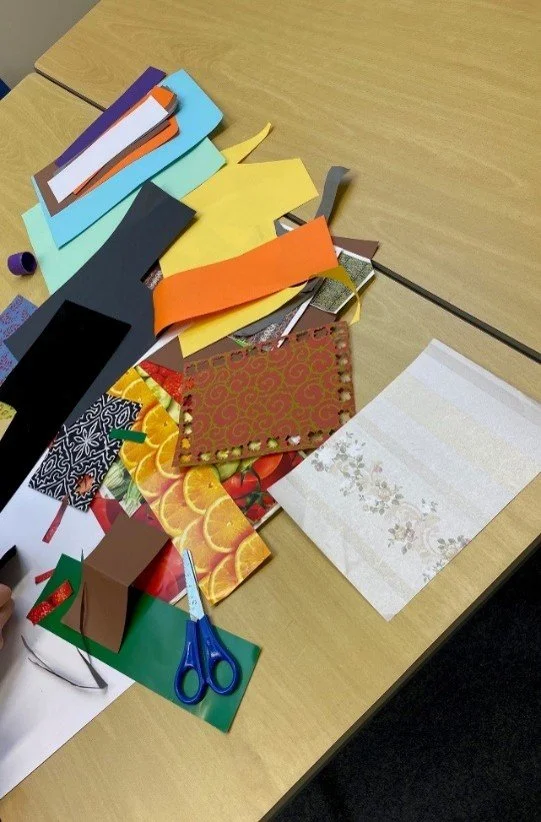
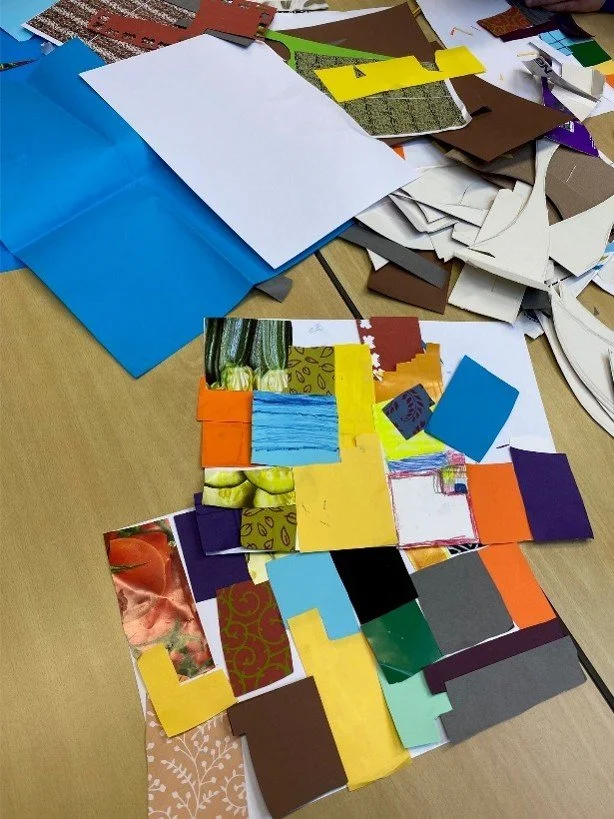
I decided to explore how using art might help the nonverbal child that I work with. There was an opportune moment in class when another child had triggered the child and they were extremely scared, angry and upset. I quickly grabbed some paper, glue and scissors and asked them to come and work with me on the group table (Figure 3). I knew from previous lessons that they particularly enjoyed cutting out shapes. A soon as they walked over to the table and saw the art materials, I could see that their focus was drawn immediately to them. They grabbed the paper and scissors straight away and through their tears started cutting a square shape from the piece of paper and glued it to the white piece of paper. He then cut another and another, cutting them extremely quickly and trimming them so that they fit next to one another exactly. After a few pieces his cries died down and he chose to sit down on the chair. He continued to cut the different square and rectangle shapes out of the different pieces of paper, rummaging to find the colour or piece that attracted him. As the minutes passed, I could see that the cutting and rummaging for pieces of paper became less frantic, less urgent and less grabby. Watching his body disposition, I could see that he physically relaxed and sat more comfortably on the chair. He took more time to cut the pieces more accurately and stick them onto the paper in a steady almost sedate pace. His facial expression also changed dramatically, not wincing or crying but instead having a completely relaxed face and mouth. Even more noticeably his eyes changed from staring wildly, red and in pain to being calm and soft. They appeared to be fully content and, in the moment, fully focusing in their art making and connected to the scissors and the material (Figure 4).
The child produced three pieces in total, one after the other with each piece appearing to demonstrate a change in attention and focus. He went from wanting to cover the whole page quickly in the first piece, to then thinking about creating a more defined shape with the pieces, ending with a piece of mixed media in the final piece. In between the first and second pieces the child also got up to get some pens and pencils which he wanted to also use with the paper. This indicates how he was physically able to draw and colour at the end of the session using fine motor skills materials, which I believe he would not have been able to physically do / focus on enough to do at the beginning (Moon 2010) . His work demonstrates the tangible shift physiologically that appeared to take place when the child was given art materials to use.
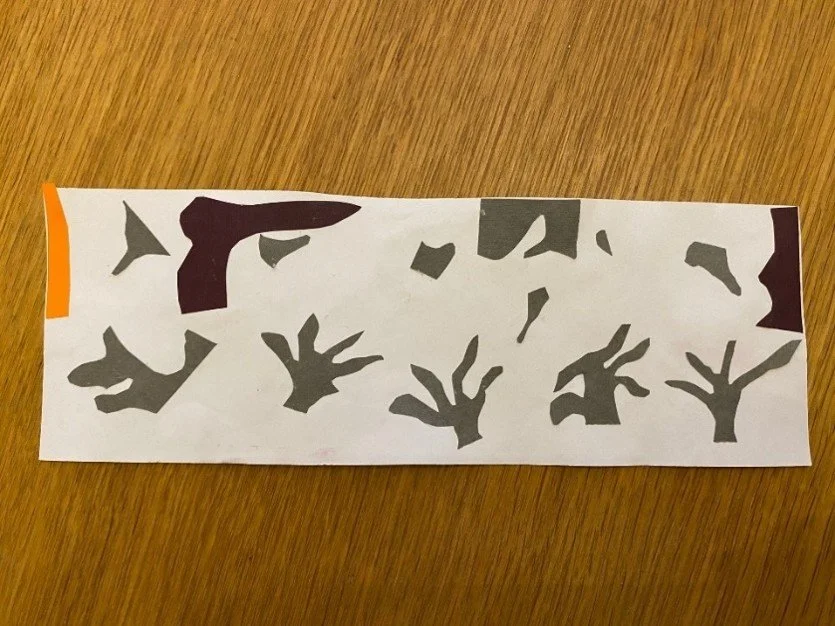
In relation to Kaimal’s adaptive response model (ART) one could argue that during this experience the unsayable and constricted emotions that has been locked in had been expressed through the child using the art materials and expressing their imagination. It enabled the child to break from the predictive response to a new survival choice, “Art therapy taps into the brain’s predictive capacity and innate narrative capability by enabling individuals to imagine alternate and potentially adaptive and healthy choices.“ (Kaimal 2019:3). The change and feeling of calm and contentment sitting next to them was so very tangible. Just as strong was the contentment that I felt when I made art with him. This changed from at first feeling some anxiety on how to help the child and concern for their wellbeing, having lots of thoughts about what I needed to do to help them, to feeling at peace and calm inside. I also chose coloured paper and stared to cut random shapes out, not consciously thinking about what I was making but instead just connecting to the material and also noticed that my pace of cutting also slowed. It also changed from rounded shaped to some straight edged shapes - similar to the child’s approach (see Figure 5). One could suggest that we were mirroring each other in our work, and that by being more aware of my feelings and increasing my self-awareness and examining own kinesthetic responses it can reveal clues as to the feelings of the client (Mohacsy, 1995)
Springham (2018) explores how relating with art objects can add to or improves the engagement of the attachment system in art therapy and I believe in this exchange, the art materials decreased the emotions felt in the child and allowed for a less intense connection between us as we made art together. Springham (2018:9) adds, “art is particularly useful for “marking” experiences through mirroring because the art object so readily signals a “not for real” quality, which decreases the risk of the relational encounter becoming too intense.”
I believe this experience will feed my art therapy practice and teaching practice going forward significantly with a greater appreciation of the role art materials can play in shifting and helping with physical and emotional states.
References
Kaimal, G. (2019) Adaptive Response Theory: An Evolutionary Framework for Clinical Research in Art Therapy. Art Therapy 36 (4), 215–219. https://doi.org/10.1080/07421656.2019.1667670
Kaimal, G., Ray, K., Muniz, J., (2016). Reduction of Cortisol Levels and Participants’ Responses Following Art Making. Art Therapy 33 (2), 74–80. https://doi.org/10.1080/07421656.2016.1166832
Moon, C.H. (2010). Materials & media in art therapy: critical understandings of diverse artistic vocabularies. Routledge: London.
Springham, N., and Huet, V., (2018) Art as Relational Encounter: An Ostensive Communication Theory of Art Therapy. Art therapy 35 (1), 4–10. https://doi.org/10.1080/07421656.2018.1460103
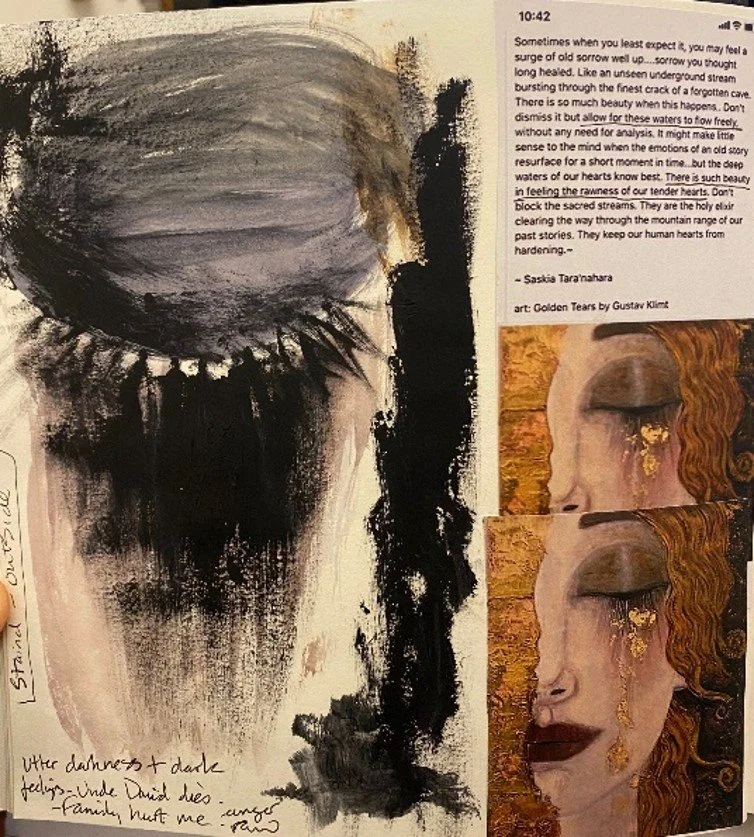
Figure 1 Response art to my feelings during lockdown after the passing of my uncle by Emma Everett-Ware.
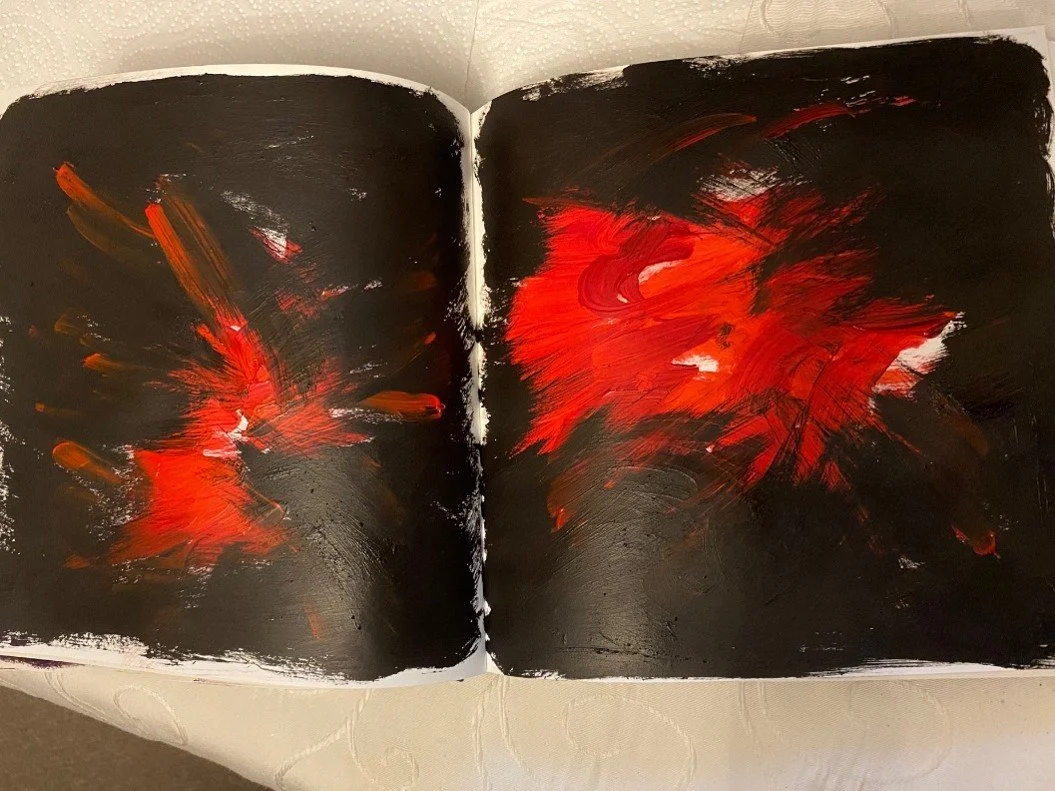
Figure 2 Response art to feelings during lockdown by Emma Everett-Ware.
Figure 3 Various paper resources used with the child in a session by Emma Everett-Ware.
Figure 4 Paper resources and some of the child’s art work mis session by Emma Everett-Ware.
Communication with nonverbal autistic children through art-making
December 2025
“Art is a way of recognizing oneself.”
Having taught in an SEN provision for a year and having had significant previous experience of working with SEN children, I decided to explore using art therapy and communication with nonverbal children.
I have been working with the nonverbal child for a few months and I have seen them demonstrating emotions very physically with actions such as hitting their head, going to the bathroom, crying and crying out, and calling out verbally (noises not recognisable words). The child is unable to make any words and is unable to make most sounds. A ‘no’ sound is the only clear and legible sound that they can make. They do not have any other methods of communication apart from a touch pad which they refuse to use. This makes it extremely difficult to understand what is troubling the child, and over time I have learnt to make educated guesses as to what the issue could be. The HCPC standards for art therapists state that it is important to be able to communicate effectively with using effective verbal and nonverbal skills (standard 8) so I wanted to explore the nonverbal communication to prepare for my future practice.
Mohascy (1995:3) looks at how Mahler (1975) identified the child as having a ‘sensory body’ in its early years, where the child who does not have the ability to speak, processes cognitive emotions and information physically. Spitz (1965) states that during a child’s infancy it is the coenesthetic system that reigns; with sensation dominating over cognition and where the child projects its thoughts through body language and physically signals desires. I believe that the child could still have that sensory body with heightened sensations dominating their cognition at times. Citing Bruner (1964) and Horowitz (1972), Geller (1978:31) states that humans “encode and process information on three levels: through action, through imagery and through language.” Because the verbal language is not really present in the child I am working with, they try to process and encode their information via images and action. A significant example of this is how they are constantly drawing small characters and little figures in pen or pencil on paper. They often line the paper up on a table and draw a whole series of characters, completely filling each piece of paper. It is as if they are trying to communicate a story or meaning through these images and they are purposely placed on pieces of paper.
Mohascy (1995) also talks about how clients are very aware of a therapist’s body language, and so a therapist needs to be aware of the physical signals which they give to the client to avoid ‘kinesthetic miscommunication.’ (1995:36). Within my practice with the child I have realised that if I stay calm and just hold the intention of sitting with them and holding the space with them, it acts as a mirror to guide them. At first when I worked with the child, I began to ask them lots of questions and spoke lots to them about what they were drawing or doing, and I found that this appeared to raise the frustration levels both within me and the client. I now realise that holding the silence is just as supportive and important in creating a safe space for them to express their emotions and feelings. Furneaux-Blick (2019:179) supports the theory that silence is an integral part of the art therapy process when making art with a client, “Silence can be a facilitating part of the art therapy process, despite the fact that silence can be difficult to sit with. The joint activity created a containing space for difficult feelings to be experienced”
I have set up several art activities with the group of children I teach, and some individual sessions. I have found that the process of making art together supports a deeper level of communication to both verbal and nonverbal children. In some instances, some of the children may have not wanted to take part in the activity, or they became frustrated in the process when something went wrong, but the actual process of sitting together and making the art together somehow created a shared experience of being together on many levels (Furneaux-Blick, 2019:169). A nonverbal communication between us creates a safe space with the cooperation of the child, so even when they did not want to take part in the activity, the important outcome was a building on the relationship between client and therapist / teacher, which helps to improve their learning and ongoing growth.
Moon (2002) also argues there is a beneficial aspect of making art with clients in enabling nonverbal communication, but reminds us that when doing to as therapists it is important to be in tune with the needs of the client. Marshall-Tierney (2014:98) also supports Moon’s philosophy, arguing that creating art together can help to address the power inequality that is inherent in therapeutic relationships. In an SEN setting the building of therapeutic relationships and achieving a balance of power is crucial. It gives me confidence in my own practice to use art making to help communicate when verbal communication is not possible.
Another key aspect of communication when working with a nonverbal client is addressing the counter transference experienced. When another child triggers the child I am working with, or when something upsets them you can see the physical stress externally, and I have found that it triggers similar anxiety and stress in me. The transference and counter transference aspect of art therapy is widely acknowledged, and I believe it is something to both be aware of when practicing and to also use to help me understand the feelings that exist within the client through my own. When I reflect on my own experiences with the nonverbal child, and indeed with all the SEN children in the provision, it has been through countertransference that I have been able to recognise and acknowledge their feelings and frustrations. With this child in particular, it was largely due to not being able to communicate and be heard, which is something that resonates very personally with my own life experience. This collection of shared experiences has definitely served to help me understand the child’s needs, and in turn helped the child to be heard and understood and helped me to recognize the significance of nonverbal communication in art therapy.
References
Furneaux-Blick, S., (2019). Painting together: how joint activity reinforces the therapeutic relationship with a young person with learning disabilities. International journal of art therapy 24 (4), 169–180. https://doi.org/10.1080/17454832.2019.1677732
Mahler, M., Pine, F., & Bergman, A. (1975). The psychological birth of the human infant. New York: Basic Books.
Marshall-Tierney, A., (2014). Making art with and without patients in acute settings. International Journal of Art Therapy 19 (3), 96–106. https://doi.org/10.1080/17454832.2014.913256
Mohacsy, I., (1995). Nonverbal communication and its place in the therapy session. The Arts in Psychotherapy 22 (1), 31–38. https://doi.org/10.1016/0197-4556(94)00060-5
Moon, C. (2002). Studio art therapy: Cultivating the artist identity in the art therapist. London: Jessica Kingsley.
Spitz, R. A. (1965). The first year of life: A psychoanalytic study of normal and deviant development of object relations. New York: International Universities Press.
Springham, N. (2016). Descriptions as social construction in the UK art therapy research. International Journal of Art Therapy, 21(3), 104–115.
https://www.hcpc-uk.org/standards/standards-of-proficiency/arts-therapists/